Organic Farming Practices Protect Natural Resources

Conservation and regeneration of natural resources are core tenets of organic agriculture. They’re also key to fighting climate change. When you eat with Joyfully Organic Farm, you’re directly supporting our efforts to strengthen Ontario’s natural resources and build climate resilience.

How? For starters, instead of applying pesticides and herbicides, we opt for alternative practices that protect our waterways, air quality, and soils. Instead of suppressing biodiversity, we view the farm as an ecosystem, a habitat for many, and work with nature to support biodiversity, protecting wildlife and pollinators.

These practices not only reduce the effects of climate change, but develop our resilience to its consequences in a myriad of ways–here are just a couple of examples:

  • Healthy waterways and soil hydrologies absorb heavy rain events, mitigating flood damage.

  • Strong wildlife and pollinator populations keep food webs in check and ensure the proliferation of both wild and cultivated plant life.

  • Healthy soils sequester carbon.

  • And the reduction of greenhouse gasses (from opting out of hazardous fertilizers and pesticides) slows the very rate at which climate change develops.

Of course, each of these natural resources is connected to, and directly impacted by, its peers. Healthy soils support healthy wildlife populations, clean air protects pollinators, improved soil structure bolsters water quality, and so on. As one factor is strengthened, they all are. And that’s just what climate resilience is requiring of us: an investment in this complex, interconnected web of land and life, such that it can withstand the more extreme and less predictable effects we’ve come to expect from climate change. With effort and investment in the right places, we can develop climate resilience 💪 .

Every dollar spent with Joyfully Organic Farm represents a multitude of benefits beyond that tasty tomato. You’re contributing towards a future with clean, swimmable, drinkable water; healthy wildlife and pollinator populations, fewer greenhouse gas emissions; and last but not least, an improved resilience to climate change as a result of all of the above. We thank you for your support of climate-friendly farming–we couldn’t do this work without it.
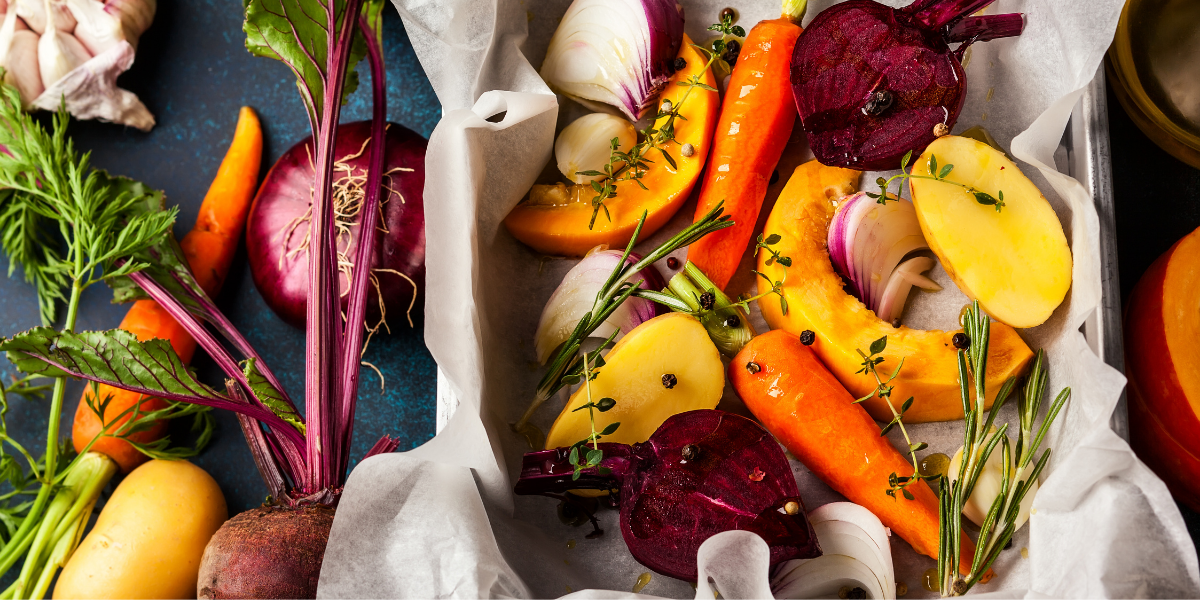


Kitchen Guide: Roasting Veggies

7 Tips for Perfect Roasting Every Time

1. Preheat your sheet pan at 400 F. +
To get that nice browned edge, roast your veggies on a pre-heated pan.
2. Cut vegetables of equal size. +
Try to keep them around 1 inch so they cook evenly.
3. Toss them with oil.
Oil is a necessary ingredient to get the caramelized edges. You can use avocado oil, olive oil, or coconut oil. Use about 1 T. per pound of veg. Toss with your hands.
4. Season with salt and pepper. +
At the very least, season with kosher salt and pepper. But have some fun experimenting with other spice blends.
5. Don't overcrowd the pan. +
Veggies will steam instead of roast if you pack them too tightly. Leave plenty of breathing room.
6. Roast at 400 F for 20-45 minutes.
High heat is required for roasting. Cook heartier veggies longer than more delicate ones. Look for the toasty tips and edges that signify doneness.
7. Stir the vegetables halfway through cooking.

OPTIONAL: When the roasted vegetables come out you can toss them in a roasting vinaigrette to season them. Stir up: 2 Tbsp White wine vinegar + 1 Tbsp Olive oil + 1/8 tsp pepper + 1/4 tsp Salt + 1 tsp honey + 1 medium shallot minced. Toss hot vegetables in vinaigrette.

PRO TIP: Roasting veg is not merely for the standards like potatoes and carrots. Just about every vegetable is fair game! Don't forget to include: radishes (yes radishes!), kohrlabi, peppers, onions, green beans, eggplant, cabbage, turnips, beets, and zucchini!

Imagine feeling relieved because eating health is suddenly made easy

Exciting news! Your chance to join our incredible Farm Share for 2022 - opens in just a few days. We are planning our BEST year yet - hence my face below :) We expect spots to go fast, so put February 8th at 7 am on your calendar, because we wouldn't want you to miss out. 

Until then, we are going to answer all the questions you might be wondering... What's inside that glorious box of veg? How do I sign up? What's this I hear about access to a U-Pick Flower Garden?! (Spoiler: it's true!)

Stay tuned to your inbox for all the glorious details. And in the meantime...

In the meantime imagine...

...being excited about what you eat because it's fresh + the flavours are incredible

...feeling relieved because eating healthy is suddenly made easy 

...being proud because you eat locally + know your farmer personally

...feeling included in our special + fun farm community

... feeling confident in the kitchen because  of all the cooking education that's provided free with your weekly box

For you to download, print + keep!